


Children’s fiction has always held a special and important place among books. Kids are naturally curious and constantly learning new things. Books are one of the best ways to satisfy this curiosity.
Parents also want to encourage a life-long reading habit in their children. They aim to develop their children’s thinking and creative skills, and to introduce new ways of learning. Books can play a key role in fulfilling these goals.
A writer of children’s books should aim to support a parent’s ambitions for their child through their stories. To achieve this effectively, certain guidelines must be kept in mind.
Tips for Writing a Children’s Book
1. Choose a target audience
It’s not enough to write for ‘kids.’ Your challenge will be to satisfy both the parent and the child. A parent has a significant role in choosing a book until the child is 10–12 years old. After 15, the child becomes the main decider of which books they want to buy and read.
A children’s writer must remember that kids are constantly growing and learning. At different stages of their life, what stimulates them and satisfies their curiosity will vary. The target audience for books with text ranges from 12 months/1 year onwards. At one year, children are introduced to alphabets, progressing to 14–15 years, when they read more complex texts for analysis in school.
Your choice of words, expressions, and story will depend on the target audience. Here is a simple guide for writers to figure out what kinds of books are appropriate for which age group, and the recommended word counts:
- For very young children (ages 0 to 5)– Picture Books and Board Books work the best
- Early Picture Book Length: 200 to 750 words
- Early readers (ages 5 to 7) progress onto books with short amounts of text on each page and some can read books with simple chapters. They’re still picture-driven, but they need less picture support and are familiar with a more extensive reading vocabulary.
- Older Picture Book Length: 500 to 1000 words
- Simple Chapter Book Length: 3000 to 10000 words
- Young readers read simple chapter books aimed at children ages 7-12 moving on to fewer picture-driven books.
- Chapter Book Length: 10,000 to 30,000 words
- Young Adult (YA) fiction is the realm of children aged 13 and older, touching on themes that specifically affect teenagers.
- Book Length: More than 30,000 words


2. Be creative
Kids are drawn to stories that do not hold back on imagination. Prioritize originality over genre, and sprinkle in factual details lightly. Children are more impressed by creativity. Check out books by Dr. Seuss or Sheetal Durve for inspiration.
3. The main character
Develop your main character with care. The best children’s books feature characters who are unique, quirky, and funny. If the character looks or talks like any other child, it won’t engage readers (e.g., Diary of a Wimpy Kid, Harry Potter).
4. Start your story quickly
Grab the child’s attention immediately. Studies show that 98% of successful children’s books start the story within the first 1–3 pages. Long descriptions of setting or character are off-putting; action should begin quickly to keep the reader engaged.
5. The plot should revolve around one main problem
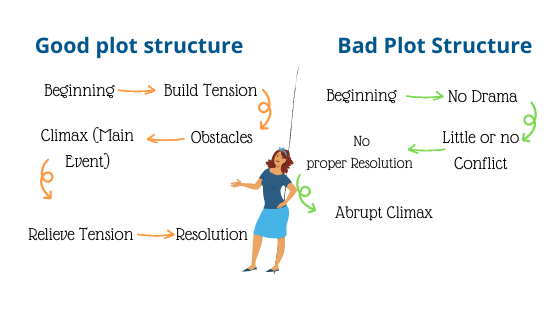
The main character faces one central problem and works to overcome it throughout the book. Ensure the problem is not solved too easily, and that the character cares deeply about it.
The book should present many obstacles the main character must overcome. At the climax, just when it seems they might give up, the problem is solved. This releases tension, and the story should conclude quickly afterward.

6. The title should jump out
Make the title exciting, full of action or mystery. It should provoke curiosity and leave the reader guessing. Long, descriptive titles are boring and should be avoided eg. IN PARIS– The Uncommon Detectives Return, Hailey At Foxels Academy
7. Keep some elements educational but do not preach
Children can easily spot a moral lesson. Focus on fun stories that kids can relate to, like everyday routines with an imaginative twist (e.g., toys come to life). Avoid a tone that tries to teach; instead, appeal to parents with subtle learning elements. Like in the very popular children’s book, Let’s Play
Introduce new words and concepts that challenge children’s thinking and expand vocabulary. This allows learning to feel natural and fun, rather than like schoolwork. Reading should always be an enjoyable experience.
8. Write a children’s book for listening
Many children enjoy being read to. Keep sentences flowing naturally, and consider reading them out loud to check rhythm. Rhymes and repetition add musicality to your writing and engage young listeners.
9. Practice and observe
Writing a children’s book takes practice. Carry a notebook to jot down observations about kids. Don’t stick with your first idea—experiment with different characters and see which works best for your story.
Continue Your Journey as a Children’s Writer
Have thoughts or experiences from your own writing journey? We’d love to hear them — share your insights with us and help inspire more aspiring children’s authors.
Learn from Other Writers
If you’re looking for more inspiration, explore:
- An interview with a well-known children’s book author — insights into imagination, character building, and engaging young readers.
- A video conversation with a young storyteller — discover how children themselves think about writing stories.
Need Guidance Beyond Writing?
Once your manuscript is ready, you may want to understand what comes next — editing, illustrations, layout, or preparing your book for readers.
If you ever need professional support in this journey, the team at Zorba Books is always happy to guide writers with the next steps.
You can reach out to us anytime for expert assistance in turning your story into a beautifully crafted book.