
Pricing an eBook looks simple from the outside—pick a number and publish.
But anyone who has spent time in publishing knows that pricing is a far more delicate decision. It influences how readers perceive your book, how retailers recommend it, and how the overall marketplace positions you as an author.
After working in the publishing industry for more than 10 years and observing thousands of authors across fiction, non-fiction, academic, and niche categories, one thing is clear: a well-thought-out eBook pricing strategy can completely change the outcome of a book.
This guide brings together practical experience, market observations, and current digital publishing trends to help you choose a price that aligns with your audience, your goals, and the competitive landscape of 2025.
1. Why eBook Pricing Needs a Strategy—Not Guesswork
eBooks don’t follow the same rules as print. There’s no printing cost. There’s no MRP. Readers behave differently. And unlike physical books, eBooks compete globally.
A good pricing strategy helps you:
● Position your book correctly
● Increase visibility on Amazon
● Build early traction
● Earn consistent royalties
● Strengthen your author brand
A wrong price can create the opposite impact—poor conversions, low visibility, and slow growth, even if the book itself is excellent.
2. Understanding the Price Expectations of Readers
Readers in India are highly price-conscious, but they also reward quality and credibility. Over the years, certain price ranges have proven reliable:
Indian Market Trends
● ₹49–₹99 → Short reads, poetry, flash fiction
● ₹125–₹199 → Fiction and general non-fiction
● ₹199–₹299 → Business, self-help, premium non-fiction
● ₹299–₹399 → Technical, academic, specialised subjects
Why ₹49–₹99 Works: The Data Behind the Strategy
| Price Point | Avg. Conversion Rate | Reader Perception | Ideal For |
| ₹49 | 12–18% | Impulse buy | Short fiction, poetry |
| ₹79 | 8–12% | Value-for-money | Debut novels, memoirs |
| ₹99 | 6–10% | Premium budget | fiction, memoirs |
Source: Amazon KDP India, 2024
Global Market (USD)
● $0.99–$2.99 → Promotional and first-time authors
● $2.99–$5.99 → Mainstream Kindle pricing
● $6.99–$9.99 → High-value non-fiction and niche expertise
3. How We Recommend Pricing an eBook (Based on Real Publishing Experience)
Most successful authors follow a blended approach:
- Understand your audience and genre
- Analyse competing books
- Start with a slightly lower launch price
- Increase gradually as traction builds
- Use occasional promotions for visibility
For most authors, this combination works better than any single model.
4. Word Count Still Matters
Although there is no printing cost, readers still compare value based on length and depth.
● Short Reads (under 10,000 words) → ₹49–₹99
● Standard eBooks (20,000–40,000 words) → ₹125–₹199
● Full-Length eBooks (50,000+ words) → ₹199–₹299
This helps align reader expectations with perceived value.
5. Common Mistakes to Avoid
Even experienced authors sometimes fall into these traps:
● Setting a high price without building an audience
● Changing the price too frequently
● Matching competitor prices without understanding the category
● Undervaluing specialised knowledge
● Launching at ₹99 for a book intended to be premium
● Avoiding promotional discounts altogether
These mistakes can slow the book down early in its journey.
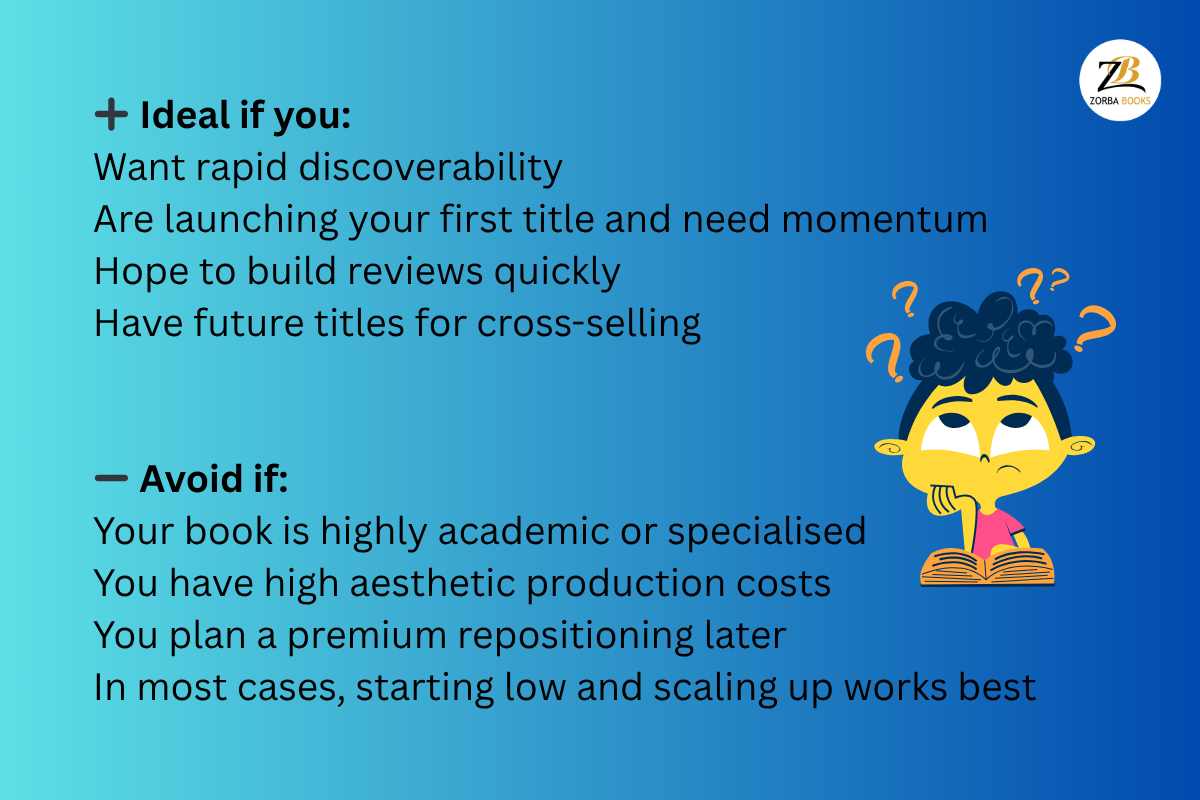
Is Low‑Price Strategy Right for You?
6. Platforms That Support Low-Cost Pricing
- Amazon KDP India: Offers 35% or 70% royalty options depending on price and region.
- Google Play Books: Flexible pricing and reach across Android users.
- Zorba Books, a trusted name in assisted self-publishing, helps authors navigate pricing strategies tailored to Indian readers.
Final Thoughts: Pricing Is a Strategy, Not a Number
A good eBook pricing strategy is not about choosing a random figure. It’s about understanding
your readers, your competition, your goals, and the psychology of digital marketplaces.
Over the years, we’ve seen one thing repeatedly:
Books with a strategic pricing plan perform significantly better than books with a static or poorly thought-out price.
If you get the pricing right, everything else—visibility, reviews, rankings, and sales—begins to fall into place.
These bands are not rules—just patterns that have consistently worked across genres.
Indian Success Stories: Value Pricing Wins
- A self-help writer Tamanna C from Mumbai launched her eBook at ₹199 and hit Amazon India’s Top 100 within a week.
- A Urdu writer from Gurgaon for his first book The Dictionary of Urdu Poetry used a ₹99 ebook strategy to build a loyal following, later converting readers into paperback buyers and hit the bestseller spot both for his eBook and paperback editions.
These stories prove that pricing isn’t just about profit—it’s about positioning.
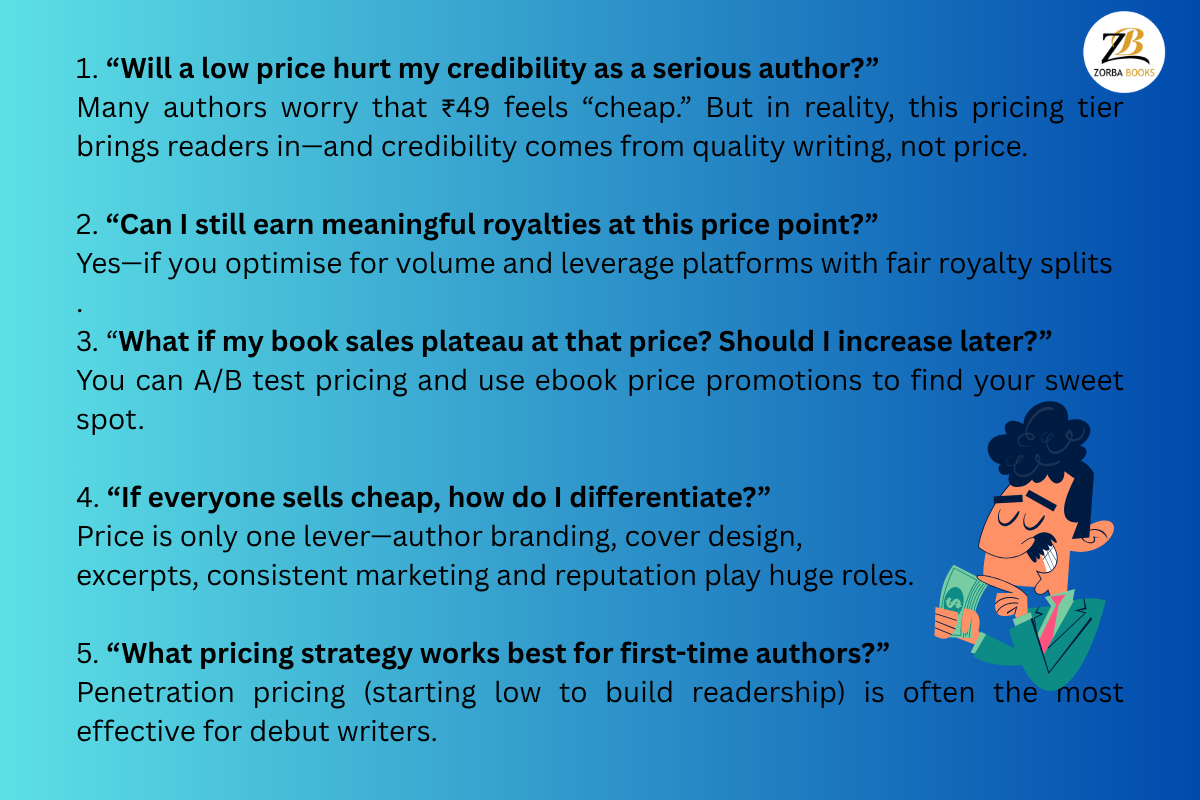
8. Common Pricing Pain Points Authors Face
9. Full Pricing Workflow for Smart Launches
- Finalize your manuscript and prepare metadata.
- Choose pricing tier: ₹99 launch → ₹49 special offer.
- Create promotional graphics/announcements.
- Send price drop notifications via newsletter & WhatsApp groups.
- Make use of content marketing to inform the reader of your book and drive sales.
- Collaborating with Book Bloggers and Podcast Hosts to Promote Your Book
- Encourage reviews in book buy confirmation emails.
- Evaluate after two weeks and decide if price should reset or stay.
In most cases, starting low and scaling up works best.
Contact our team to get started quickly and track your results.
Share This Blog with Fellow Authors
Do you know a writer worried about pricing strategy or how to market affordably in India? Share this post with them on WhatsApp, LinkedIn, or your writer’s group—it could change their book career.