Why Most Authors Stop Promoting Their Book After Week 6 (And What to Do Instead)
Most books do not stop selling at week 6. Their authors stop talking about them.
It happens quietly. The launch photos have been posted. The WhatsApp forwards have gone round. Friends, family and colleagues have bought their copies. Then the first sales report arrives, the numbers drop, and work and family life take over again.
If this sounds familiar, you are not alone. It is one of the most common moments in an author’s journey. The good news is that it is also one of the easiest to change.
Why Do Most Authors Stop Promoting Their Book?
Most authors stop promoting their book because early sales slow down, friends and family have already bought a copy, and they run out of time, energy and ideas. Around week 6, all of this tends to happen at once.
If you want to keep promoting your book after launch, the answer is not a bigger launch. It is a small, steady routine you can keep up for a full year.
Here are the seven most common reasons authors stop, and what to do instead.
1. When Sales Dip, Look at the Whole Year
Picture a new author who checks her sales every morning. In the first month, she sells 300 copies. In the second, she sells 40. It feels as if the book has failed.
It has not. Almost every book sells fastest at launch and then settles into a slower, steadier pace. That is normal. The dip is not the end of the story. It is the start of the long part.
A better way to measure is to compare each month with the one before, not with launch week.
“Count reviews, messages from readers and invitations to speak, not just sales.”
If those 40 copies a month continue for two more years, that is nearly 1,000 more readers. Small numbers add up when you give them time.
2. Look Beyond Friends and Family
In the first few weeks, most of your buyers are people who know you. By week 6, most of them have bought. That does not mean your readers have run out.
“It means your next readers do not know you yet.”
Then go where your future readers already gather. A retired banker with a book on personal finance, for example, could give free talks at his old college, his housing society and a local senior citizens’ club. Each talk puts him in a room full of people who care about his subject.
Guest articles, podcasts, library talks and local bookshops work the same way. Start a small email list or WhatsApp group too, so you can reach these new readers again. Rohit Kapur author of Ashwathama, decides to boost sales by promoting it on Meta.
3. Share the Subject, Not Just the Book
Many authors worry about becoming “that person” who posts about their book all the time. One joke from a relative, or a post with three likes, is often enough to make them go quiet.
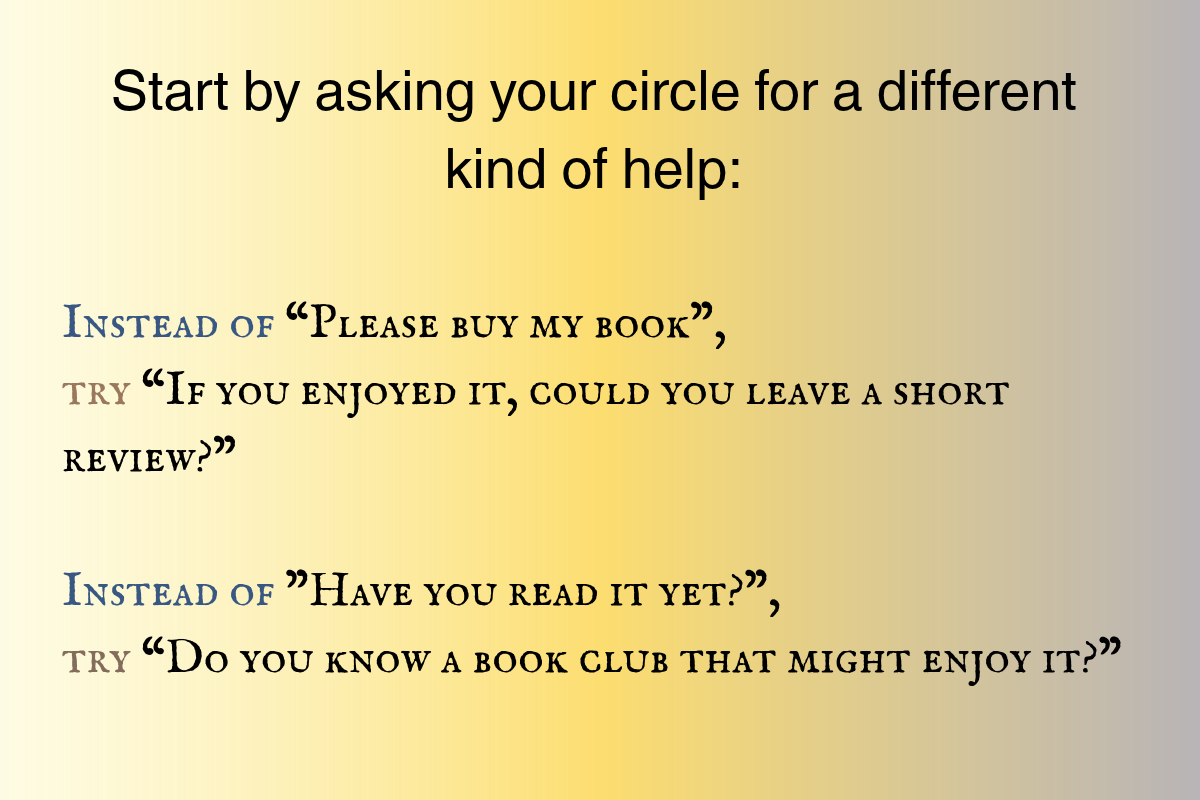
The problem is not promotion. It is promotion that only says “buy my book”.
People enjoy posts that give them something. Non-fiction authors can share a useful tip from their field. Novelists can share the places, history and ideas behind the story. A novelist whose book is set in 1970s Kolkata, for instance, could post an old photo of the city’s trams, or a recipe one of her characters cooks.
Let readers speak for you, too. Sharing a reader’s review, with their permission, is not bragging. It is proof that real people enjoyed your work.
When your posts are useful or interesting, the book does not need to be pushed. It follows naturally.
4. Plan Beyond Launch Day
Most authors plan their book launch in great detail: the event, the posts, the guest list. Very few plan what comes after. So when launch week ends, the promotion ends with it.
A simple 12-month plan fixes this. It does not need to be fancy. Give each month a theme, and choose one small task for each week.
Link your posts to dates your readers already care about. A children’s book about trees, for example, has natural moments on World Environment Day in June, when schools reopen, before Diwali and on Children’s Day in November.
Then add a few mini-launches through the year:
a new format, such as an ebook or audiobook
your 50th review
an award shortlist
your book’s first birthday
Each one gives you a fresh, honest reason to talk about your book again.
5. Let Your Book Give You Things to Say
After the cover reveal, the launch photos and the first review, many authors feel there is nothing left to share.
There is. Your book is full of material. It is simply waiting to be used.
Try these:
a favourite quote, with one line on why you wrote it
a lesson, tip or idea from the book
a piece of research that surprised you
the story behind a character or chapter
a question a reader has asked you
When a news story connects to your subject, share your view on it. And turn one idea into several pieces: a post, a short video and an email.
A memoir with 20 chapters already holds 20 stories. List 30 post ideas in one afternoon, and you have enough to post twice a week for more than three months.
6. Count What Matters
Many authors post, share and pitch without knowing what is working. When nothing seems to change, carrying on feels pointless.
The answer is not to track everything. It is to track a few small things, once a month.
Choose two or three numbers, such as sales, reviews and email sign-ups. Use a different link for each platform, so you can see where buyers come from. At events, simply ask, “How did you hear about the book?” A technique Ravi Kodukula author of Unretirement: Stories from the Cabin and the Couch is enthusiastically trying along with reviews and email sign ups to boost sales.
Picture an author at a book fair who asks every buyer that question. If most say Instagram and almost no one says Facebook, she knows where to spend her time.
Keep a note of your effort too, such as posts shared and pitches sent. Effort shows up long before results do.
7. Make Promotion Small Enough to Keep
Writing a book can take years. After that, promotion can feel like a second job, often on top of a full-time one. Many authors try to be everywhere at once, burn out and stop completely.
Rest is not the problem. Stopping for good is.
Pick one or two social media platforms where your readers actually spend time, and let the rest go. Set aside two or three hours a week. Write a month of posts in one sitting and schedule them. If you need a break, take one, but mark a restart date in your calendar. Suresh Ramachandran has opted to try Amazon promotion to boost sale of his book My Way is the Sure Way, amongst other promotion avenues.
Say an author keeps every Sunday morning for her book. In two hours, she schedules four posts, pitches one podcast and replies to readers. Then she is done for the week.
Small and steady usually beats big and brief.
A Simple Routine You Can Copy
You do not need a big team or a book marketing budget. You need a routine small enough to keep:
Every week: one post about your book’s subject, one pitch to a new audience, and one real conversation with a reader.
Every month: a quick look at your two or three numbers.
Every three months: one mini-launch, built around a date, a milestone or a new format.
Over a year, that is about 50 posts, 50 pitches and 50 reader conversations. All of it happens after week 6.
Frequently Asked Questions
How long should I promote my book after launch?
Promote your book for as long as it is on sale. The first three months are usually the busiest, but a steady weekly effort for at least a year keeps your book in front of new readers.
Is it too late to promote a book that came out a year ago?
No. Anyone who has not heard of your book will see it as new. Look for a fresh reason to talk about it, such as an anniversary, a new format or a news story linked to its subject.
How can I promote my book without being pushy?
Share useful or interesting posts about your book’s subject, and mention the book itself only now and then. Let readers’ reviews speak for you.
A Final Word
Most books are not failing at week 6. Their authors are simply stopping too soon.
Keep it small. Keep it steady. Keep talking to the people your book was written for.
That is where a book’s real life begins.
A successful book is not one that sells a thousand copies in its first month. It is one whose author is still happily sharing it in month twelve.