
Let us explore the doors that can open as a result of self-publishing a book in India.
Consider the examples of some well-known Indian authors who have benefited from publishing their books. Amish Tripathi and Ashwin Sanghi are among the notable Indian authors for whom publishing a novel opened many new opportunities. Today, they are not limited to writing books alone. They are regarded as authorities on the subjects they write about; mythology—in the case of Amish Tripathi. They regularly appear on television, contribute articles to newspapers, and participate in talk shows and literary festivals, to name a few.
These are precisely the kinds of opportunities you should look for when you decide to publish a book. If you think these benefits do not apply to self-publishing, expert publishing, vanity publishing, or POD publishing, it is worth noting that many authors, including those named above, have self-published and have gone on to enjoy these advantages.
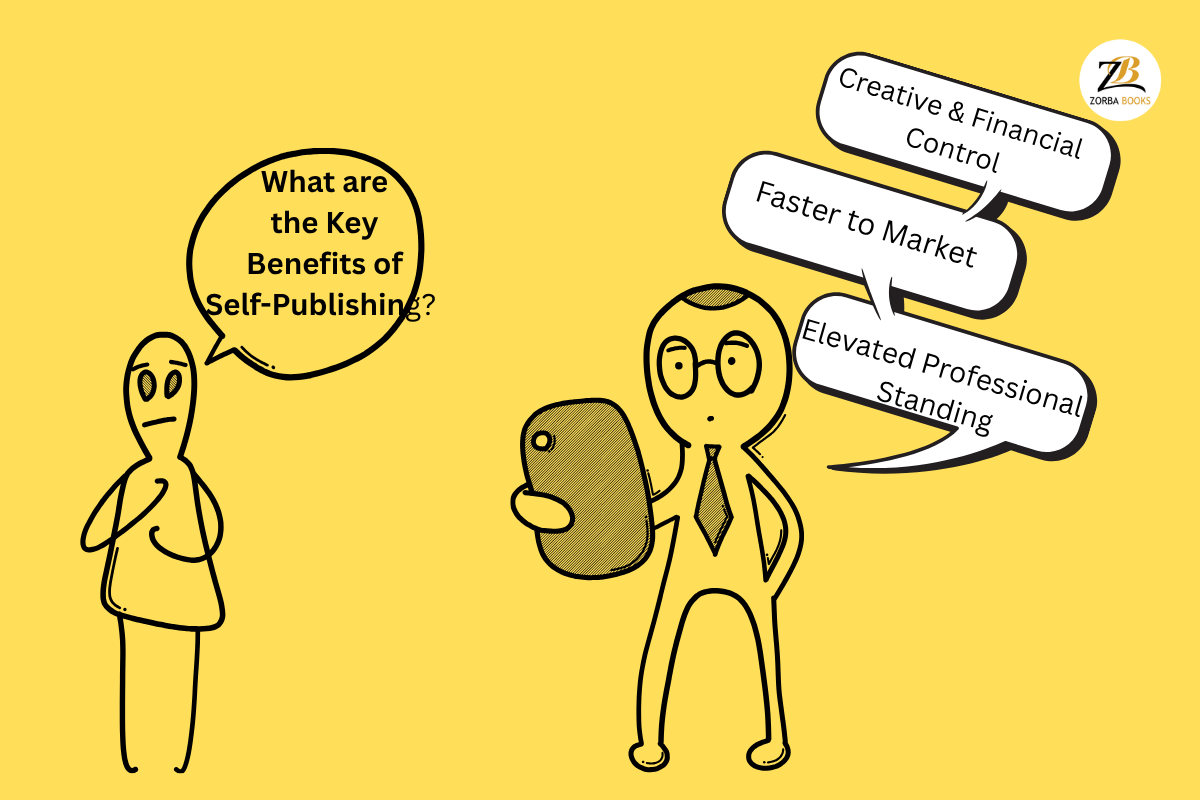
1. The Key Benefits of Self Publishing
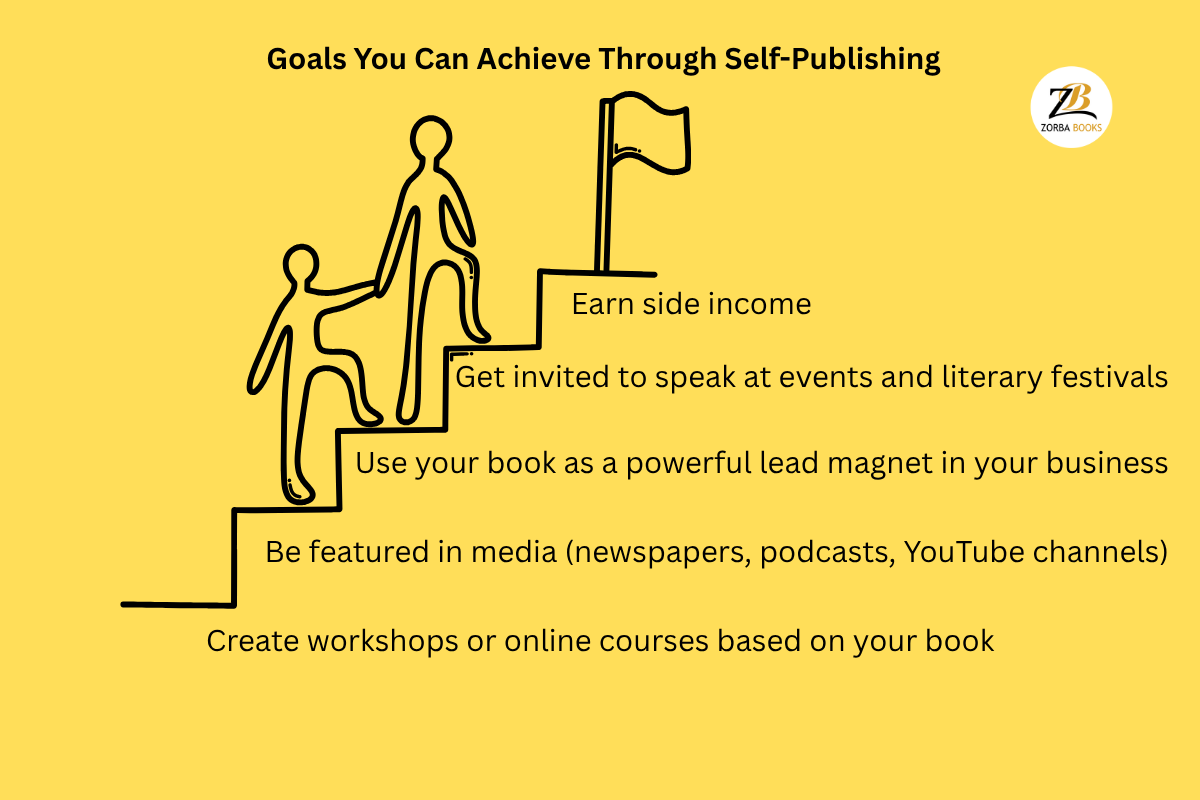
- One significant outcome of writing a technical or non-fiction book in your area of expertise is that your professional standing immediately gains more weight. The next time you update your biodata or resume—whether on a website or for an application—do not forget to mention that you are an author. This distinction can help you move ahead of the competition.
Notice how even well-known personalities often display the title “Author” alongside their name and designation.
- You now have something that the print media can talk about—your book. In the process, your skills and expertise gain wider visibility. Newspapers, radio interviews, blogs, and other platforms may feature your work, provided you actively seek these opportunities, e.g., Long-retired Lady Air Marshal Padma Bandopadhayay.
One important benefit of self-publishing is that your book can become the basis for invitations to speak on the radio, at colleges, or at literary festivals. You may be invited to speak on the topic of your book, the book itself, or related subjects that emerge from it. As in the case of Ambassador Prabhu Dayal, a popular participant in discussions on leading English channels on Pakistan. This is one of the critical factors considered by platforms such as the Jaipur Literature Festival, which often asks: “Have you published a book in the preceding year?”
Publishing a book establishes credibility for you as a person, entrepreneur, and professional. You become better known and more widely recognised. It builds trust with the public, especially when your work receives media attention. Do not hesitate to highlight your book and your achievement. - Becoming an author improves your standing within your community or society.
- Publishing a book also allows you to test the waters and assess your writing abilities as an author.
- It can serve as a stepping stone toward being noticed and eventually taken up by a larger publishing house.
- It provides you with a side income.
- Total Creative and Financial Control: One major benefit of self-publishing is complete control over your book’s content, design, pricing, and distribution. You’re not bound by the commercial expectations of a publisher. This freedom enables you to craft a product that stays true to your voice while retaining full rights and royalties—typically up to 80% from platforms like Zorba Books.
- Fast Time to Market: Traditional publishing can take 1–2 years to bring a book to market. In contrast, self-publishing allows you to publish your book in days or weeks. Whether you’re aiming to release a timely business guide, novel, or memoir, speed can be a crucial advantage—especially if you’re aligning your launch with a conference, event, or trending topic.
- Last but not least, there is a strong possibility that your confidence in your ability as a writer—and even as a promoter of your own work—is well founded. You may find that your books are indeed finding enthusiastic readers.
Hear from a Self-Published Author
“Publishing with Zorba Books” – Swati Chopra shares her experience as a writer and HR leader.
Remember, the only door that remains closed is the one you don’t try to open.
2. Where Can I Self Publish My Book?
In 2025, the options have grown even more diverse. Some of the most reliable and popular platforms include:
Amazon Kindle Direct Publishing (KDP) – Best for global ebook and print-on-demand (POD) reach.
Zorba Books – A robust self-publishing platform based in India offering editing, cover design, and marketing support.
Draft2Digital – For distributing across multiple international ebook stores.
Wattpad – If you’re looking to build a reader base before formal publishing.
These platforms offer guided processes that act as a self-publishing guide you can follow—right from manuscript to market.
3. The Modern Tools That Help You Succeed
AI-Powered Editing and Formatting
2025’s authors are no longer doing it all manually. Use AI tools like Grammarly, ProWritingAid, and Sudowrite for editing assistance. For formatting, tools like Atticus and Reedsy streamline book layout and design.
Community Building Through Newsletters and Social Media
A successful book launch today depends heavily on your personal brand. Build an email list via Substack or ConvertKit, and engage readers through platforms like Instagram, LinkedIn, or even niche communities on Discord and Reddit.
Audiobooks and Translations
More readers now prefer audio or regional-language versions. Tools like Speechify and Voice123 help convert your book into an audiobook easily. Services like Google Translate (refined by native speakers) can assist with basic translation for multi-language publishing.
4. Common Mistakes to Avoid in 2025
- Ignoring professional editing: First impressions matter. Hire a good editor.
Poor cover design: Invest in a high-quality cover. It’s your book’s billboard.
Rushing your launch: Build buzz in advance. Treat it like a product release.
Not pricing strategically: Understand your audience and competitors.
5. Self Publishing in India for Novels: A Special Note
India’s literary market is expanding fast, especially in tier-2 and tier-3 cities. Genres like mythology, romance, regional fiction, and historical drama are in high demand. Self publishing in India for novels gives authors a unique chance to bypass gatekeepers and connect directly with these growing audiences.
Also, don’t ignore regional languages—Hindi, Tamil, Bengali, and Malayalam readers are highly engaged and eager for locally relevant stories. Consider dual-language editions or translating successful titles.
Helpful Reading
Print-on-Demand Books: The Future of Publishing in India
The Evolution of Self-Publishing
Conclusion: Seize the Self-Publishing Advantage
The benefits of self publishing in 2025 go far beyond book sales. It’s about building authority, connecting with readers, and creating opportunities. So if you’ve been sitting on a manuscript, there’s no better time than now to take the plunge. Use this self-publishing guide you can trust, choose the right platform, and start turning your ideas into impact.
Remember, the only door that remains closed is the one you don’t try to open.
1. I agree, absolutely, that publishing non-fiction adds weight to your claims of being a (serious) writer. You are, also, taken more seriously as a writer.
2. It would feel great to mention it in your CV.
Thank you for endorsing the views expressed in our blog
My language in full Hindi plz translate in English
Sure. Pl send us your sample and contact number on info@zorbabooks.com
i want also publish my book but without spent money..
Aditya, as of now we donot have free book publishing options